Sunday, October 9, 2011

Sorry (But Not Really)

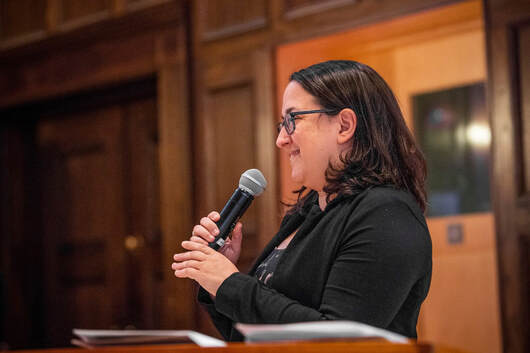
Jennifer Gubitz
Brooklyn Jews | 5772 | Kol Nidre


“Apologize to your little sister,”
she yelled to the back seat of our 1992 Chrysler mini-van
with wooden, yes, wooden siding.
“Right now,” she commanded.
A huff ensued, then a grumble, but finally
“Sorry…”
It seemed my 13-year-old brother*
had succumbed
to the greatest prosecutor of them all – our mom.
But then with a ridiculing, retainer ensnared grin,
In a voice so quiet she would never hear,
A cantankerous qualifying statement:
“but not really.”

It was a superfluous statement to begin with.
The first time I put
the orange Tupperware bowl to my mouth
To consume the final remnants
of milk and cheerios…
He stealthily walked over to me,
and deftly smashed the bowl into my face –
Milk and cereal dripped from my hair and clothes.
In but a few minutes, I had changed clothes
and returned to the breakfast table
to attempt eating once more.
And again, when I reached the last bits of my cereal bowl,
I raised it to my face –
Yes, we had questionable table manners -
And you can imagine what happened next.
This second attack
on my cereal bowl and mop of long curly hair–
was enough to nullify any future apology.
We all knew – my mom, my brother, me –
that he was not really sorry to begin with.
And yet, she demanded from him an apology
That could only transpire through falsehood.

His qualifying
(But not really)
was actually the most honest,
albeit snide, statement to follow up
that apology he never truly meant.

It’s amazing, tragic even,
just how hollow language can become.
We know the world
of disingenuous, empty, apologies all too well.
Victim and guilty of it ourselves, I’d guess.
Examples:
“I am so sorry that you heard me say it that way”
or
“I’m sorry that you feel that way”
which are really to say:
“Whoops,
didn’t mean for it to come out that way”
or
“I’m not actually sorry for what I did”
or even a judgment:
“Wow, you’re really sensitive.”
But neither, it seems, a sufficient apology.
And of course:
“Sorry I’m late…”
and
“Sorry I didn’t call you earlier…”
Or:
In the hustle of the morning commute –
“I’m sorry (but not really.)
After all you were in my way
when I was trying to
catch the D across the platform.”
And then again a judgment –
“Who wears open toed heels in November anyways?”
And, the worst of them, I think:
An email apology
which seems to really say
“I’m not apologetic enough
to say this to you in person.”
So many types of apologies
cloaked with qualifying statements
That ultimately negate sincerity.

We are socialized from early on,
well before we can really identify
A sense of feeling apologetic or remorseful.
The lines are fed to us –
Apologize to Arielle; Say your sorry to Sammy!
The toddler expresses, then,
In a voice so sweet
that alone it cancels out the crime,
“I sorry,”
“Accident Mommy,”
“No bite daddy.”
This is not to say toddlers are insincere so much as they
Learn to mimic what we teach them to say
As we prompt them to apologize and seek forgiveness.

And today, on our holiest day of the year,
A day prescribed to us centuries ago,
Out of the thoughtfulness of rabbinic
Forefathers and, its nice to think, foremothers…
On this day that prompts us
to apologize and seek forgiveness,
The question exists:
Are we really any different than a toddler?
Yes, we are more emotionally,
more spiritually mature -
But are we really any more penitent, apologetic, and sincere?
We were given a manual.
Someone told us what to say.

Our manual, our liturgy, which we will read shortly, guides us:

(sung/tapping chest)
Ashamnu, Bagadnu…
We have been guilty,
we have betrayed,
we have stolen,
we have spoken falsely…

He’evinu, v’hirshanu…
We have acted perversely
and we have done wrong;
We have acted presumptuously
We have done violence…
We have counseled evil

When I really stop to look
through the litany that is our Vidui confessional,
I take pause.
Yes this past year, I have felt guilty and betrayed
And have been guilty of betrayal.
Stealing, however, another’s property? No;
another’s happiness or spotlight– possibly.
Gossip– unfortunately, yes.
Guilty of that.

But counseled evil? No – not guilty.
Presumptiousness? Probably.
Violence? No.

And yet – every year, whether or not I am guilty,
I confess to these misdeeds.
In unison, we all confess to these transgressions.
We pound our chests –
(sung)
Ashamnu- we are guilty…
Bagadnu – we have betrayed…

A real dissonance reverberates in our confession.
Though beautiful that liturgy
connects us to the past,
If we are merely reading words on a page,
As we’ve been taught to do -
but in them cannot find meaning,
or relevance,
or truth
if in them we cannot find ourselves
and the words we speak feel hollow,
what does it matter
if we declare our penance aloud?
Or what does it matter if we do not declare our guilt at all?
Is it better to falsely admit to falsehood or simply remain silent?

While on Yom Kippur,
false admission may gain us admittance
into the presence of the true judge,
the Holy One Above –
In our criminal justice system,
fabricated confessions
Whether by coercion or personal choice,
can send one into the presence of a judge,
and ultimately to jail.

Practical, liturgical, judicial, theological discord abounds.

True story.
Eddie Lowery served ten years
for a crime to which he confessed,
but did not commit.
A September 2010
New York Times article
tells Lowery’s story –
as one of at least forty people,
who since 1976 confessed to a crime
that DNA tests later proved erroneous.
While the article suggests
that the downtrodden are among
the likeliest to be induced to confession,
there are also people like Mr. Lowery,
who claimed he was just “pressed beyond endurance by persistent interrogators.”

Are we, the annually penitent,
simply coerced into our confession –
reading from the ancient script in our machzor -
because its ‘what we are to do on Yom Kippur?’
Have we,
like Lowery,
been duped,
intimidated even into false confession?

How do we hold the discordant truths of
The sins we did not commit
with the all encompassing
“Al Chet Shechatanu L’fanecha” –
“I have sinned against you.”
How do we turn the acrostic confession of Ashamnu, written out for us centuries ago,
And that after years of recitation,
can become, Rabbi Louis Jacobs suggests,
a “purely mechanical act devoid of inwardness”
Into a personal truth,
That is unique to the moment,
Not to the masses.
So that when we have actually sinned,
when we have actually hurt
our loved ones, ourselves, God –
we can infuse what may have been
previously empty confessions
with truth, meaning, and honesty.

The modern Hebrew utterance – slicha –
Of many meanings -
Excuse me! I'm sorry! Pardon me?
Is rooted biblically.
While often a casual statement,
Its origins resonate an emphatic plea
for forgiveness, for pardon.

Slicha is not so different from the English “Sorry,”
rooted in the Old English “Sarig”
meaning distressed, grieved, or full of sorrow.

But many utterances of slicha and sorry
have gone the way of speech acts,
phatic expressions – essentially small talk
like “Hey, how’s it going”
or “What’s up?”
In the US, we know not to expect
a real answer to those questions
And often on the phone, awkwardness ensues
As both participants utter some sort of
“Hey, how’s it going, Good, I’m fine, cool.”
Phatic, general or casual, has become
the socially acceptable way of communicating.

The language of our daily lives is casual, is phatic
But the language of prayer is emphatic.
Traditionally, our confessional liturgy
is recited 10 times over the course of Yom Kippur.
So many times
we have the opportunity to read these words
And to infuse them with personal meaning,
Emphasizing and accentuating
our deepest held truths.
Let not your Yom Kippur confession
go the way of small talk.
Let it not be hollow language,
mired with conditional statements.
Let it not be uttered simply because it was written.
Rather -
live in the discord of apologizing for that
which you’ve not done,
love the opportunity to repent for committing sins,
and causing pain, of which you were unaware
Or remain silent and confess only to the sins
You know you’ve committed.
Or beat your chest twice for those which
Weigh most heavily on you this year.
Or beat your chest
for the one who will never repent,
Knows not how to repent,
or for whom forgiveness and reconciliation
are of great distance.
Adon Ha-slichot, O, Source of Forgiveness,
S’lach lanu, m’chal lanu, kaper lanu –
Forgive us, Pardon Us, Grant Us Atonement.

*Sorry (kind of) to my brother for public slander.

Tuesday, January 11, 2011

Aleph, Bet, Vet...A moment of memory

http://tiny.cc/DebbieFriedman

Monday, September 20, 2010

Food for Thought

Happy New year! Some new ideas to chew on...


Making Meaning out of Meat
Brooklyn Jews High Holidays
Kol Nidre, September 17, 2010 ~ 10 Tishrei 5771
Jennifer Gubitz

Back home again in Indiana, I’m driving on a street just like Flatbush, and I can see the place where Shapiro’s deli used to be. What’s there now? A generic cafeteria-style restaurant. It was once the site of the deli that my grandfather frequented religiously for his daily newspaper and coffee. On our visits to see him, we’d drive directly from the highway to Shapiro’s deli. This was before cell phones, but we knew exactly where to find him. I loved nibbling at my mom’s corned beef sandwich alongside a cup of matzoh ball soup at a place where everyone knew my Zayde’s name. Even a few years after his death, we could stop at the deli and the staff would recognize us as Morris’ family. To my surprise, when I stepped off a plane at the new Indianapolis airport, I was greeted by a Shapiro’s Deli kiosk. I love that deli so much that I’d buy a round-trip ticket from anywhere to hop off the plane just for a nostalgic bite of time with my Zayde.

Jews and food - like salt and pepper, peas and carrots. Ironic, maybe even annoying, isn’t it, to have a sermon about food on Yom Kippur? Yes. But even on our Day of Atonement where we experience the polarization between fasting and feasting – even on this day when we are to afflict ourselves with hunger, even on this day our memories are tightly bound with smells and spices, and cluttered with synagogue cookbooks with tattered edges from regular use, boxes of oil-spattered index cards with family recipes from the old country and internet clippings of recipes from the new country.

We can all taste that special honey cake of our youth, can recall the dissatisfaction that spread across our mother’s face when the matzoh balls were too soft or too hard, or when the smile creeped into her face expressing pleasure when she knew they were ‘just right.’ You can hear the endless questions: Would you like some more brisket, kugel, tsimmis, apples and honey? Come on, honey, eat more. For many of us who have started our own lives and families, it is the meals enjoyed throughout the High Holidays during which we most long for lace tablecloths, china dishes, grandparents, and savory smells from the kitchens of our past.

Away for the holidays for the past ten years, I’ve tried to emulate family recipes, attempting to translate into precise measurements what was meant by “a dash of this, a dash of that.” What if my dash and your dash are different? Ultimately, it never tasted quite the same as I remembered. Maybe, it turns out, a recipe was inconsequential. Maybe I loved it so much because of who made it for me…

In recent months, these delicious memories have come to a slow and steady halt. This summer, I devoured Michael Pollan’s “Food Rules,” a book that outlines basic rules for healthy eating framed by the mantra “Eat food, Not too much, Mostly plants.” My next course was Jonathan Safran Foer’s “Eating Animals,” written in a nostalgic, storytelling fashion that juxtaposes disturbing facts about the food industry with the author’s own Jewish memories of food. He writes of his Holocaust-survivor grandmother and her legendary but sole recipe of chicken and carrots. Teetering for years between meat eating and vegetarianism, his greatest struggle: What would it mean for him, and to his grandmother, to eat only the carrots?

Foer reveals the horrors of factory animal farms, microbes and animal illness, and the immense suffering animals raised for slaughter experience in a lifetime, stomach-churning descriptions of the pain animals experience on their journey to our dinner table. He contrasts the human love for meat with the love we give to our household animals. “I wouldn’t eat [my dog], because she’s mine. But why wouldn’t I eat a dog I’d never met? Or more to the point, what justification might I have for sparing dogs but eating other animals? ” Why did we decide that it’s immoral to eat a dog, but moral to eat a cow?

So began my foray into vegetarianism.

Already a casual meat eater, I stocked up on seeds, quinoa, tofu and vegetables. Local food got a little closer as I walked into the back yard to pick fresh squash and zucchini.

Then, the synagogue where I worked had a BBQ. I love BBQ.
The hamburger beckoned to me from the grill. Eat me, it said. It’s okay, really. I’m already prepared and you don’t have to think of the process. Just eat me.

And so I did it. I ate the burger and later that evening, washed it down with Chicken Fingers at a San Francisco Giants Game.

It was so easy to be indifferent to the history of the burger, to the life of the chicken finger. It is such a rare occasion that we see farmed animals that it becomes quite easy to forget that there is a story behind the food in our freezer. The toasted bun helped to further shield me from seeing reality.

The next morning I recalled Foer’s account of his first confrontation with the problem of eating animals at age nine. He tells of the time his teenage babysitter asked him: “You know chicken is chicken right?”

The next day, I became a vegetarian again. Every day, actually, I wake up as a vegetarian.

What is it then that’s keeping me from going to bed as one?

It’s in vogue to talk about food right now. Every major newspaper reports regularly on some aspect of our food intake. Activist groups each try to get our attention on a variety of issues. Animal rights. Health. Kashrut. Ethical eating. Sustainability. They are all quite compelling and each provides numbers that are startling.

In the New Yorker, Elizabeth Kolbert wrote that in 2009, Americans cooked “roughly twenty-seven billion pounds of beef, sliced from some thirty-five million cows. Additionally, they…consume(d) roughly twenty-three billion pounds of pork, or the bodies of more than a hundred and fifteen million pigs, and thirty-eight billion pounds of poultry, some nine billion birds.” Who can even imagine what such numbers look like in practice? With the magnitude comes ambivalence and confusion. With those massive numbers of meat eaters, one can’t help but wonder: does it even matter if I stop eating meat?

Jews and animals have been intertwined from our inception. In Genesis (1:26), “yir’du vid’gat ha’yam u’v’oaf ha’sha’mayim” - God gives humanity dominion to “rule over the fish of the sea and the birds of the air, over the livestock, over all the earth, and over all the creatures that move along the ground.” Yirdu: The Hebrew verb, lirdot, is translated in the Torah to mean, “rule over.” It can also be translated to mean: oppress or subjugate. Thus, the text could be read: “and they shall oppress” all of the aforementioned animals. Why is there a divine promise that human beings can subjugate animals? When we read this biblical verse, we need to remember that this it reflects a certain milieu. The ancient Israelites were a people who subsisted primarily off of a “diet of barley bread, vegetables, and fruit, supplemented by milk products and honey” and regular consumption of meat was primarily by elite classes. The Women’s Torah commentary suggests that this verse was not intended to be a mandate to rule over animals in an exploitative fashion, rather the biblical text was probably intended to “comfort early readers who lived at the mercy of the natural world, who were vulnerable to its predictability, and who had reason to fear becoming prey to wild beasts.” They didn’t likely envision a world where people would be gobbling up animals.

Would it be fair then to say: in order to live an ethical Jewish life, I don’t have to stop eating meat. Rather, I should just eat meat in a non-exploitative fashion? Or could I find a way to make eating meat a truly meaningful practice?

Our ancient texts offer us one such option. They suggest that eating meat was heavily connected with simcha, with the joys of Jewish celebration. The Talmud teaches that “when the Temple was in existence…Ein simcha ella be-basar… there could be no joy without meat. ” Abraham Ibn Ezra, a 12th century Spanish scholar, wrote in the lyrics of Ki Eshmerah Shabbat, “Shabbat is an honored day, it is a day of pleasures, bread, wine, meat and fish.” We are taught, it seems, that meat helps to increase the joys of special days. Rav Kook, the early 20th century Chief Rabbi of Palestine, believed that when the Messiah came, the whole world would become vegetarian. Ironically, he himself ate meat – but only on Shabbat. A student, studying at Pardes in Jerusalem, interested in such a lifestyle of mindful and joyful meat eating has created MOOSHY, an acronym standing for “Meat only on Shabbat, Happy Occasions and Yom Tov,” a philosophy of meat-eating whose name is self-explanatory.

Our tradition teaches that meat should be eaten rarely in order to enhance special occasions. It’s not clear to me, however, that meat increases the joy at special events. Yet when a friend who is a lifelong vegetarian mentioned that she didn’t want to serve any food at her wedding that she couldn’t eat herself, I was aghast. I silently judged her. Guests will come all this way to celebrate with you and all you offer them is a portabella mushroom?

Jonathan Safran Foer tells this story: “Two friends are ordering lunch. One says, “I’m in the mood for a burger,” and orders it. The other says, “I’m in the mood for a burger,” but remembers that there are things more important to him than what he is in the mood for at any given moment, and orders something else.” Are my ethical convictions strong enough to wake up and go to sleep every day as a vegetarian? I’m not sure if I can do that.

In his URJ Biennial Address before 3,000 Reform Jewish lay and professional leaders, URJ President Eric Yoffie made the bold statement, “…let's make a Jewish decision to reduce significantly the amount of red meat that we eat.” I can do that.

In his book the Omnivores Dilemma, Michael Pollan tasks me further: “People who care about animals should be working to ensure that the ones they’re eating don’t suffer, and that their deaths are swift and painless.” Though never an animal enthusiast, I want to take up Pollan on his challenge. Hazon, a Jewish sustainability organization, gives lists of farmers who raise their animals in non-factory farm settings. Ordering meat through GrowAndBehold is a way to purchase farm raised, Kosher slaughtered products. Its more expensive, but a good way to put our money where our mouth is. Yes, I can do that, too.

Pollan sums it up with a message easily applied to so many other areas of life, ethics and behavior, writing that “We are defined not just by what we do; we are defined by what we are willing to do without.” In Isaiah 58, tomorrow’s Haftorah portion, we learn that it is not so much a day of fasting that God wants from us, but a day where we deeply reflect in order to transform our ethical conduct, a day where we fill our empty bellies with food for thought. Isaiah juxtaposes food and ethical behavior and we should do the same at our dinner tables.

In the years to come, may we gather around the table for bountiful holiday meals, blessed by the warmth of friends, family, and fantastic food, savoring every moment.
Let us make meaning out of meat consumption, wherever it is we fall on the spectrum.
Let us consider thoughtfully the process by which the meat we purchase is raised and slaughtered.
Let us find a middle ground between feasting and fasting, every day eating in moderation, perhaps even minimalism, amid a world of global disparity.

O Source of Sustenance, on our day of affliction, we thank you for afflicting us with the opportunity to make such choices.

Thursday, February 11, 2010

This I believe...

Jews don’t talk enough about God…so here is a go at it - that was part of something for school but could at least set you off thinking...

This blog has been dormant for some time and its not clear if it will be entirely rejuvenated, but I would love to hear your comments in the meantime...

This I believe…

My future sister-in-law asked me over Thanksgiving if I believed in God, and I was hesitant to say yes. Something about it just didn’t seem entirely right. I felt like I needed to say “Yes, but” or “Yes, and here’s how…” But I also felt guilty saying “no.”

My classmate Kim will tell you after sharing a hotel room with me – that the first words out of my mouth at 7am in the morning were: “God hates me.” I have a humorous theology based on “serentripity,” (when the trains are in perfect sync with one another and wait for me across the platform,) weather patterns (when it rains in NYC, God truly hates me,) and a default life soundtrack that compels me to sing Avinu Malkeinu on a regular basis – which has less to do with ‘our father, our king,’ and more to do with a desire to belt out Jewish music.

I’m not really caught up enough on my theology class reading to treat this with great academic depth. Further, we do all of our work in class based on the assumption that God exists, which leads me to believe that I am required to believe in God. In a spiritual guidance course, the professor suggested to me that whenever I feel lonely or am looking for someone to talk to – try talking to God. That was a powerful suggestion and yet still assumed that I believe.

It seems that I most recognize a divine presence in my life when I’m faced with serendipitous situations that elicit a thoughtful response from me. It might be a 3 second interaction with someone or a result of intense preparation or in a moment of required learning. I don’t seem to enter the situation with God on my mind, but seem to reflect back on the experience through a lens of wonder. Every time I see my friend’s 14-week-old baby boy, I’m regularly awed by the gift of life and perplexed at how such life grew in a person who sat next to me in class. Disbelief, really.

Sitting on the porch, leading 15 nine-year-olds in Mi Chamocha, unadulterated singing right from their chubby little guts - this scene is unparalleled by most of my world travel experiences and I’ve filled my passport. What is it about that moment at camp that was godly that did not exist in my memory in all that I’ve seen in the world? Is it the distance from my travels at which I write and the proximity to camp that brings it to the forefront? Or possibly - God must have been there at camp. If so, God wasn’t present because of anything I did – but I think because of the sheer energy that the kids produced, though such energy could not be produced were it not for a divine being that creates energy in the first place.

This summer, reading “Girl Meets God" for school, I was uncomfortable with the God language used because it struck a chord in me from my childhood. Growing up Jewish in a city nicknamed “City of Churches,” at the same time in high school that my Jewish identity was developing, so were the respective identities of my Christian classmates. There were Catholics who were devout but quiet in their faith. On the flip side were the evangelical Assemblies of God Christians who were devout and the farthest from quiet about their faith. They referred to Jesus like he was sitting next to us in class and I wondered if he was there and I simply couldn’t see him, given the breadth of description they gave him. It seemed as we continued to grow up that their relationships with Jesus were stronger and more important than their friendships with me. I was drawn, unsurprisingly, to those who grew up Unitarian or in the UCC community because they prioritized other things in life over Jesus. I suppose I could reclaim for myself the language of “a relationship with God” but remembering the visceral response such language drew out of me in my youth, I cannot imagine saying it aloud to a group of congregants, lest they think I’ve gone off the theological deep end.

That aside, if I’m to address said relationship; I think I address it mostly with anger. I can’t get over the struggles of Jewish history and chalk them up to a God that loves us. Its in my nature to dwell on things so maybe it’s a bit unusual to still be mad about the Crusades in the Rhineland, but I’d say the Holocaust is in recent enough history to illicit anger. And really, why does God let people die? Who is the God who plagued the Egyptians in order to free the Israelites? Who is the God that favors one people over another? A few weeks ago, I wrote in a sermon a statement to that question – I don’t believe in that God. If my dear friend Sara never tires from taking care of her sweet baby Caleb, how could God’s holy adrenaline run low when the children of Israel were in their greatest need?

My classmate Ilene told me that all of the experiences I’m putting myself through in relation to spirituality and theology are my way of ‘crying out to God’ and that I’m just asking, waiting, impatiently as is my nature, for an answer. It’ll come, she told me, not in the form of weather patterns or the subway waiting across the platform for me, but in some fuller understanding yet to be discovered. So Blessed are you, wherever the hell you are, who gives me the energy to figure it all out.

Saturday, January 3, 2009

If Not Higher...

Though the following was written way back in October for Rosh Hashanah, the Jewish New Year, and Yom Kippur, the Day of Repentance, it still seems appropriate to think of the same themes as we begin a new year in the secular calendar.

In light of the war going on in Gaza, the sermon also reflects for a moment on Arab and Israeli coexistence in the most unlikely of places. May we see such a day in the near future. Happy New Year!

***
The Rabbi of Nemirov had a strange habit. Every Friday morning he vanished and was gone for hours. Then suddenly, just in time for Shabbat, he would reappear. No one knew where he went. A whisper went among his disciples that the rabbi actually ascended to heaven for a few hours, communed with God, and returned.

One new student, a bit of a skeptic, could not stand the mystery and desperately wanted to know where the rabbi really went each Friday. One Thursday night in winter, the young man sneaked into the rabbi's house. He climbed under the rabbi's bed and waited there all night until the rabbi awoke just before daybreak. The rabbi dressed himself in old, dirty clothes, the clothes of a woodsman. Taking an axe and a large bag from a hook on the wall, out he went.

The young man followed as the rabbi went deep into the woods. At one point the rabbi stopped, and chopped and split as much firewood as he could put into the bag. He then continued into the woods, the young man following quietly behind. Eventually the rabbi came upon a rundown shack, and knocked on the door. A strained woman's voice called from within, "who's there?" The rabbi replied, "The woodcutter. I see no smoke coming from your chimney. You need wood. You must be cold." "I am," the woman said. "But I am a poor, sick woman. I have no money to pay you." "Don't worry," the rabbi answered. "I'll lend you the money you need." "But I don't know when I can pay you back." Again, the rabbi said, "Don't worry yourself, you'll pay me when you can pay me."

The young man saw the rabbi enter the house, and heard the sound of wood being unloaded and stacked. A few minutes later a curl of smoke began to float upward from the chimney. The rabbi left the house, axe in hand, and headed for home.

The young man followed him back to town. He could, of course, tell no one of what he had seen. But from that Shabbat on, he prayed at the rabbi's synagogue and studied at the rabbi's table. And ever after, when some disciple would remark on the Rabbi of Nemirov's Friday habit of ascending to heaven, the young man would quietly respond, - if not higher.

**
I spent a considerable amount of time in Israel working with inmates – both Jewish and Arab – who committed a variety of crimes, the details of which I am generally unaware. They would show up at 8:30am at a Kibbutz educational garden. Thrilled to see us, they would approach us with handshakes and hugs, Shalom Yen v'Evan! They would chain smoke cigarettes and drink instant coffee until we called them over to the benches in front of the outdoor Ark. My classmate Evan and I would lead them in a few songs – a camp sing along really – and the men would clap and smile and continue smoking, thrilled to be outdoors, relatively free, and amused by two Americans with poor Hebrew. The Jews and Arabs sat side by side on the wooden benches, Isaac and Ishmael literally and figuratively, grinning and relaxed.

It was common for me to return from the day and tell stories about my experience. “So I was hanging out with the inmates” was commonplace. None of my friends flinched upon hearing it. I forgot this upon returning to America.

“So I was hanging out with these inmates…” You did what? “Yeah, you know, hanging out with these inmates who I volunteered with…” That conversation happened regularly until I realized something. It was frightening for many people to hear that I hung out with jailed convicts. Before I started the project, I remember wondering what it would be like, what kind of crimes they had committed, would it be safe for a young woman to spend time in this environment. The second I got there – all of my prior qualms were put to rest. These men were brothers, fathers, uncles, and friends – not convicts.

Except they were.

Occasionally, one would share a story with me about he found his way to jail. One took the fall for a ring of lawyers involved in a scandal; another killed his best friend in a drunk driving accident. Some made their crime in America and asked to be jailed in Israel because the Israeli jail system has a unique aspect to it. While we have option for parole here – in Israel, one of the equivalent words used for parole is “Teshuvah.” Translated literally this word means something about “Turning or returning,” but we also translate it as repentance, a theme most relevant to Yom Kippur. It is intrinsic in the Israeli criminal justice system that one is able to repent for wrongdoings and turn away from sin in order to return to society. Part of this is the beauty and the challenge of the Hebrew language – many words used for secular life also hold religious meaning. For example, the seventh day of the week is called Yom Shabbat. While in this word it does happen to contain the same root for the letter seven – intrinsically in the Jewish week, is Yom Shabbat – the day of rest. Not the seventh day, but the day of resting. Whether one chooses to observe this day or not, everyone still refers to it as such.

After gathering together for morning songs and prayers, we got to work. Some days we picked citrus from the trees, other days we shook down olives from branches. We created mosaic artwork to lay as stepping-stones, lots of landscaping, and lots of shlepping. I even learned how to brine olives.

After working for a bit, we would eat breakfast together that the inmates had brought with them from the prison. It was delicious and an honor to be able to share their breakfast with them. Following our meal, we would sit together for Torah study. Now remember – Arabs and Jews studying Torah, together.

One morning in November, we were looking at the Torah portion Vayishlach – the story of when Jacob wrestles with an איש - a man or angel possibly- after which he is given the new name – Yisrael, planting in him the yoke of fathering a nation. “What does it mean to make a name for yourself,” we asked them, “how can you grow and change and earn a good reputation?”

Every day these guys have Yom Kippur. Every day as they sit in jail they are reminded of what act they committed to find themselves there. Once a month when they come to the Kibbutz for the morning, they are reminded of the beauty of fresh air and freedom. They understand that Judaism and therefore, the Jewish State, give them an opportunity for renewal, repentance, and return. They can repent for their crime – and it might take a long, long time. They can renew their commitment to humanity through hard work and determination to changing their ways. They can return to society and hopefully will not return to jail.

As the year progressed, I started to forget why these men were here. My curiosity of their crimes became less nagging. They were someone’s brother, father, uncle, nephew, and friend. They did bad things. They were not at their core bad people.

A complete act of Teshuvah, as both repentance and turning, occurs when we are confronted with the situation once more – but this time we do not fall into the trap of our habits, of our prior crimes. Instead we make the choice that is healthy, not harmful, challenging but courageous. There is no “mapquest” route that ensures success or happiness and at times, we might find it easier to drive along the path recklessly. Or at least, it’s faster than stopping to ask for directions. It is a true struggle to make a change in our lives. But how many times have you told your children, “if you don’t stop fighting, I’m going to stop this car and turn around…” Yom Kippur is that warning sign – the pit stop in our year, reminding us to make a change, repent, and return – TURN around…retrace our path and begin again.

We are not Israeli convicts. Nor are we rabbis disguised as woodsmen. But we all have the chance this year to become better versions of our current self.

Oh Source of Forgiveness, Oh Source of New Beginnings, on this day of awe and splendor, may both our smallest acts and our grandest deeds shine brightly in your judgment. Strengthen us as we challenge ourselves to turn away from the things in our lives that hurt us more than they help us. Allow us to turn inward to judge ourselves all the while, holding our judgment of others. In the New Year, may we each ascend to holiness, if not higher.

Student Rabbi Jennifer Gubitz
Temple Beth El
Rocky Mount, North Carolina
Yom Kippur October 2008